Snap-In Implant Dentures in Turlock
A removable denture that clips onto implants, so it stays where it is put while you eat and speak.
Medically reviewed by Dr. Broneil Ishaya, DDS — Fellow, Misch Resnik Institute of Implantology · California dental license #105491 · Oct 2026 · Written by the Turlock Dental Studio team
In short: Snap-in implant dentures are removable overdentures that clip onto two or more implants instead of resting on the gum alone. They come out for cleaning, which distinguishes them from fixed full-arch teeth, but they stay put while you eat and speak. Patients who already wear a denture can often have it converted to snap onto new implants rather than starting over.
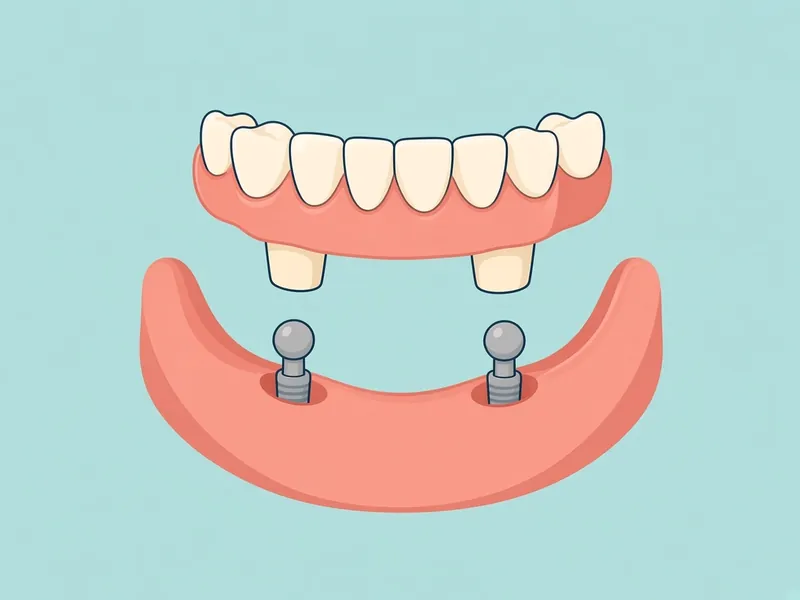
What snap-in implant dentures are
An implant-retained overdenture, commonly called a snap-in denture or simply implant-supported dentures, is a removable prosthesis that engages attachments on a small number of implants. The attachments are the mechanism: either a ball on the implant meeting a socket in the denture, or a bar fixed across the implants with clips in the denture gripping it. The denture still covers the gums and comes out at night, but it does not rely on suction, adhesive or the shape of the ridge to stay where it is put.
The difference is biological as well as mechanical. A conventional denture transmits chewing force to the mucosa (the gum over the ridge), while implants carry much of it into bone, which is why the fit tends to remain more stable and the bone better preserved.
Who it suits
It is designed for people missing most or all of the teeth in an arch who are content with a removable prosthesis but want it to stop moving. It is the middle path between a conventional denture and fixed full-arch teeth, and it earns its place when the priorities are stability without the scope of full-arch surgery.
- Bone volume needs to be adequate for the chosen number of implants; a resorbed lower ridge, common after years of denture wear, may require bone grafting for dental implants first.
- Keratinized tissue around the implants should be sufficient for comfort and hygiene, since the denture flange sits directly against it.
- Manual dexterity matters. The denture comes out daily and the attachments need cleaning, so this option is harder for patients with limited hand function than fixed teeth would be.
- Expectations need to be realistic. It is more stable than a conventional denture, and it is still a removable prosthesis with a plastic base.
How treatment proceeds here
- Consultation, CBCT and exam. The 3D cone beam CT scan shows bone height and width where implants would go, plus the position of the inferior nerve in the lower jaw or the sinus in the upper.
- Plan. Number and position of implants, attachment type, and whether your existing denture can be converted or a new one made. Itemized estimate in writing.
- Preparation. Extractions of failing teeth, alveoloplasty (smoothing of the ridge) or grafting, as the plan requires.
- Implant placement under local anesthesia, guided by the plan where indicated.
- Healing. Several months of osseointegration with your current denture relined for comfort in the interim.
- Conversion or new prosthesis. Attachments are picked up in the denture or a new prosthesis is fabricated, then delivered and adjusted.
- Maintenance. Annual checks of the attachments, which wear and are replaced periodically, plus relines as the ridge changes.
Healing, and what the first weeks are like
Two implants in the lower jaw is a short appointment; four and a full-arch conversion is longer. Swelling and soreness follow the usual pattern and settle within days. Your existing denture can usually be worn during healing after a soft reline, though we will tell you when to leave it out.
The attachments are what patients notice most: new clips feel very retentive and loosen with use. That is normal wear, and it is why attachment replacement belongs in the plan from the outset.
Alternatives
- Conventional denture: no surgery and the lowest initial commitment, but it rests on the gums, moves under load and accelerates ridge resorption.
- Fixed full-arch zirconia teeth: does not come out, feels closest to natural teeth, and requires more implants and more extensive surgery. See full-arch dental implants.
- Implant-supported bridge where the missing teeth are a segment rather than a whole arch; see implant-supported bridges.
Risks and limits
The honest limitations: it is still removable, the attachments wear, the acrylic base can fracture, and the prosthesis needs relining as the ridge changes. Peri-implant mucositis and peri-implantitis remain the principal biological risks and are more likely where hygiene is difficult or smoking continues. Converting an existing denture is economical but constrained by that denture's condition and by how much tooth arrangement can be preserved; a denture that is worn thin or badly fitting is better replaced.
Guided implant surgery and 3D-planned dental implants
Planning starts before surgery. Dr. Ishaya takes a 3D cone beam CT (CBCT) scan in our Turlock office and uses it to map the bone, the nerves and the neighboring teeth, then designs the implant position in that 3D image. In suitable cases the plan is carried into the mouth with a surgical guide or guided drilling, so the implant is placed where the plan put it instead of where it looks right by eye.
Guided implant surgery is used when the case calls for it. When it fits, the practical advantages are greater accuracy and precision in placing the implant, often less invasive surgery, typically less post-operative discomfort and swelling, and results that follow a plan made before you sit down. It is not right for every case. The decision is case-dependent, and Dr. Ishaya makes it from your CBCT and exam, sometimes choosing a freehand approach where that suits you better.
A surgical guide improves control over implant position and angulation. It does not remove the risks of surgery and does not guarantee how an implant will heal.
Dental sedation for implant treatment
If anxiety, a strong gag reflex or the length of an implant appointment is what has kept you from treatment, we offer dental sedation for implant treatment in our Turlock office. Nitrous oxide, often called laughing gas, is breathed through a small mask and takes the edge off without putting you to sleep. It wears off quickly, so you can usually resume your normal day afterward.
Oral conscious sedation is a prescribed medication taken before the appointment. It suits patients who are more anxious or facing longer or more involved visits: you stay awake and able to respond, but deeply relaxed, and many people remember little of the appointment. Dr. Ishaya is licensed to provide both options, and you are monitored throughout.
Plan ahead for oral conscious sedation. You will need a ride home, and you should not drive or go back to work that day. Tell us about every medication and health condition at your consultation so we can choose the safest option for you.
Common questions
What is the difference between snap-in dentures and All-on-4 style teeth?
Snap-in dentures are removable: you take them out to clean them. Full-arch teeth on implants are fixed, and only your dentist removes them. Full-arch treatment generally needs more implants and more surgery, and it feels closer to having your own teeth.
Can my current denture be converted?
Often, yes. The denture has to be structurally sound, fit the ridge reasonably well and have enough material where the attachments will sit. We assess that at the consultation and tell you plainly whether conversion or a new prosthesis is the better use of your money.
Are dental implants at Turlock Dental Studio guided?
Yes, when your case calls for it. Dr. Ishaya plans implants from a 3D cone beam CT scan and, in suitable cases, uses guided implant surgery with a surgical guide or guided drilling so the implant is placed where the plan put it. Whether a guide is right for you is decided case by case after your CBCT and exam.
What credentials does Dr. Ishaya have?
Dr. Broneil Ishaya, DDS is a California-licensed dentist who holds a Fellowship in Implantology from the Misch Resnik Institute. He earned his dental degree at UC San Francisco and provides implant treatment at Turlock Dental Studio in Turlock, CA.
Is sedation available for implant treatment?
Yes. Nitrous oxide and oral conscious sedation are both available for implant treatment at our Turlock office, and Dr. Ishaya is licensed to provide them. Nitrous oxide is a light relaxation that wears off quickly, while oral conscious sedation is for more anxious patients or longer visits and requires a ride home afterward.
Whether this treatment is right for you can only be decided after an exam. Every case differs, and results vary.
Sources
Find out which option fits you, starting with a free consultation.
Book a free consultation