Bone Grafting for Dental Implants in Turlock
Rebuilding jawbone that has resorbed, so an implant has a foundation to sit in.
Medically reviewed by Dr. Broneil Ishaya, DDS — Fellow, Misch Resnik Institute of Implantology · California dental license #105491 · Oct 2026 · Written by the Turlock Dental Studio team
In short: A bone graft rebuilds the jaw where bone volume has fallen short, so an implant has enough of a foundation to be placed in a stable position. The common forms are socket preservation at the time of extraction, ridge augmentation to restore width, and a sinus lift for the upper back jaw. Grafting usually adds weeks to months of healing before the implant goes in, and the CBCT scan is what establishes whether you need it.
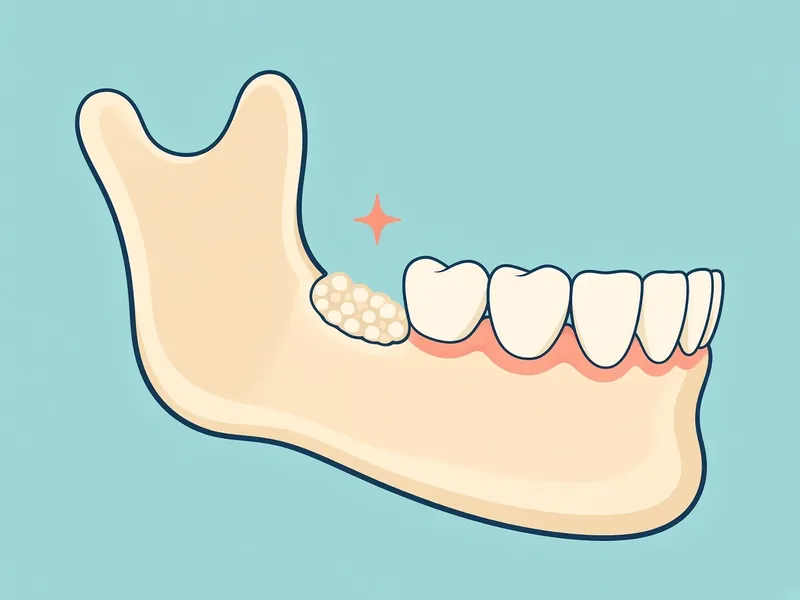
Why bone is lost, and why it matters
Alveolar bone exists to hold teeth. Remove a tooth and the bundle of bone that surrounded its root loses its function, so it resorbs — rapidly in the first months, then slowly for years. Periodontal disease removes bone while the tooth is still present, and trauma or a long-standing denture does the same. The consequence is a ridge shorter and narrower than the implant needs.
That matters because an implant is only as good as the bone around it. Adequate volume lets the implant sit in the prosthetically correct position rather than wherever a short ridge permits, gives enough surface for osseointegration (the direct connection between bone and implant), and lets the margin sit where it can be cleaned.
The main types of graft
Socket preservation
Placed at the time of extraction. Graft material fills the fresh socket and is covered, limiting the collapse of the ridge that would otherwise follow. This is the most efficient moment to intervene, because the socket itself is the mold.
Ridge augmentation
Rebuilds width, height or both on a ridge that has already resorbed. It may be a particulate graft contained by a membrane, a block graft fixed with screws, or a ridge split where the bone is narrow but tall. It is staged before implant placement in most cases.
Sinus lift
Specific to the upper back jaw, where the maxillary sinus sits immediately above the roots of the molars. A sinus lift elevates the sinus membrane (Schneiderian membrane) and places graft material beneath it to create height for implants. It can be performed through the implant site (a crestal approach) or through a window in the side wall (a lateral approach), depending on how much height is needed.
Graft materials
Autogenous bone comes from the patient and is the most biologically active. Allograft is processed donor bone, xenograft is derived from another species, and alloplast is synthetic. Each resorbs differently, and the choice is clinical rather than a preference.
Who needs a graft before implants
The CBCT scan answers this, not a visual inspection. It shows height and width in millimeters, bone density, and the position of the sinus floor and nerve canal.
- Teeth lost years ago, particularly in the posterior maxilla or mandible, frequently leave an inadequate ridge.
- Extractions where the socket wall is already compromised, or where the site is in the esthetic zone and preserving contour matters.
- Long-term denture wearers, in whom the ridge has resorbed under the prosthesis.
- Patients with a pneumatized sinus (one that has expanded downward after tooth loss), limiting available height.
How it proceeds at our Turlock office
- CBCT and measurement. Bone is measured in three dimensions, and the graft type and volume are planned around the implant position rather than the reverse. That same scan is what makes 3D-planned dental implants possible, and where the case suits it, it carries through to guided implant surgery once the graft has consolidated.
- The graft itself under local anesthesia, with sedation available for longer or more involved cases. Depending on the site, it is either placed at the same visit as the implant or staged beforehand.
- Healing. The graft consolidates over weeks to months. Socket preservation typically needs a few months; a lateral sinus lift or block graft can need considerably longer before implants are placed.
- Implant placement once the graft has consolidated, using the same 3D plan.
- Restoration following osseointegration.
What to expect afterward
Soreness and swelling follow the usual pattern for oral surgery and settle within days. Where a membrane was used, the site is left undisturbed, and nose-blowing is restricted after a sinus lift because pressure changes can displace the graft.
Alternatives when bone is short
- Short or narrow implants can sometimes avoid grafting where the deficit is modest.
- Angled implant placement, as in full-arch treatment, can bypass the sinus or nerve rather than rebuild around it. See full-arch dental implants in Turlock.
- Zygomatic or pterygoid implants for severe upper resorption, which are specialist procedures and not appropriate for every case.
- A removable prosthesis where the surgical commitment is not warranted; see implant-supported dentures.
Risks and limits
Graft complications include infection, membrane perforation during a sinus lift, exposure of a graft or membrane, and partial resorption of the grafted volume, which can leave less bone than planned. Not every graft succeeds in producing the volume intended, and a second procedure is occasionally required. Success depends on blood supply, on not smoking, on medical control and on keeping the site undisturbed during early healing. No graft is a guaranteed outcome.
Dental sedation for implant treatment
If anxiety, a strong gag reflex or the length of an implant appointment is what has kept you from treatment, we offer dental sedation for implant treatment in our Turlock office. Nitrous oxide, often called laughing gas, is breathed through a small mask and takes the edge off without putting you to sleep. It wears off quickly, so you can usually resume your normal day afterward.
Oral conscious sedation is a prescribed medication taken before the appointment. It suits patients who are more anxious or facing longer or more involved visits: you stay awake and able to respond, but deeply relaxed, and many people remember little of the appointment. Dr. Ishaya is licensed to provide both options, and you are monitored throughout.
Plan ahead for oral conscious sedation. You will need a ride home, and you should not drive or go back to work that day. Tell us about every medication and health condition at your consultation so we can choose the safest option for you.
Common questions
Does a bone graft hurt more than the implant?
Most patients describe it as comparable or milder. Both are done under local anesthesia, and the after-effects follow the same pattern of swelling and soreness over a few days. A sinus lift tends to produce more congestion and requires more care in the week afterward.
Can the graft and the implant be done at the same appointment?
Sometimes. A small defect can be grafted at the same time as implant placement if the implant can be stabilized. Larger reconstructions are staged, because the graft needs to consolidate before it can support an implant predictably.
Are dental implants at Turlock Dental Studio guided?
Yes, when your case calls for it. Dr. Ishaya plans implants from a 3D cone beam CT scan and, in suitable cases, uses guided implant surgery with a surgical guide or guided drilling so the implant is placed where the plan put it. Whether a guide is right for you is decided case by case after your CBCT and exam.
What credentials does Dr. Ishaya have?
Dr. Broneil Ishaya, DDS is a California-licensed dentist who holds a Fellowship in Implantology from the Misch Resnik Institute. He earned his dental degree at UC San Francisco and provides implant treatment at Turlock Dental Studio in Turlock, CA.
Is sedation available for implant treatment?
Yes. Nitrous oxide and oral conscious sedation are both available for implant treatment at our Turlock office, and Dr. Ishaya is licensed to provide them. Nitrous oxide is a light relaxation that wears off quickly, while oral conscious sedation is for more anxious patients or longer visits and requires a ride home afterward.
Whether this treatment is right for you can only be decided after an exam. Every case differs, and results vary.
Sources
Find out which option fits you, starting with a free consultation.
Book a free consultation