Single implant vs. bridge vs. implant dentures (All-on-4®-style)
An overview of common tooth-replacement options to discuss with your dentist.
Medically reviewed by Dr. Broneil Ishaya, DDS (CA license #105491) · Oct 2026 · Written by the Turlock Dental Studio team
Quick answer: Common ways to replace teeth include a single implant, a traditional bridge, an implant-supported bridge, snap-in implant dentures, fixed full-arch implant teeth and conventional dentures. Each differs in surgery, stability, upkeep and whether natural teeth are reshaped. Your dentist can explain which fits your mouth and goals.
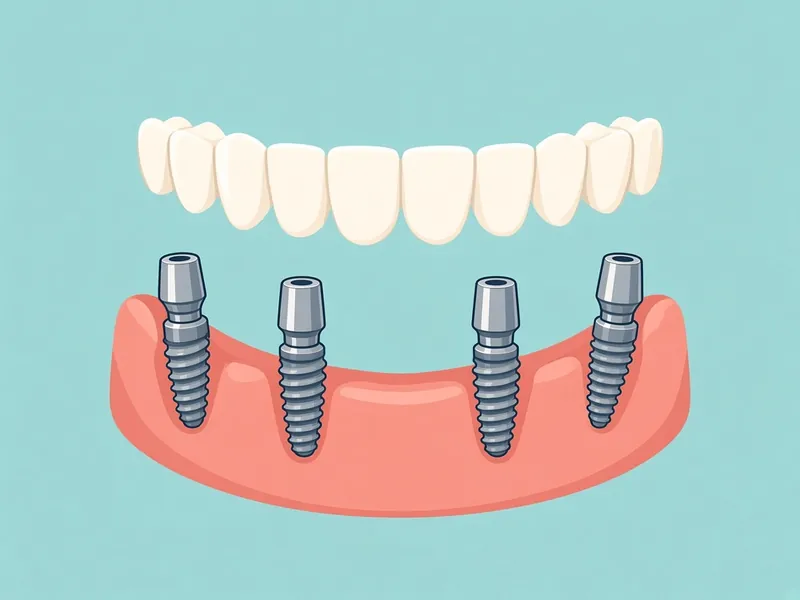
| Option | What it is | General considerations |
|---|---|---|
| Single implant + crown | One implant replaces one tooth. | Doesn't rely on neighboring teeth; requires surgery and healing time. |
| Traditional bridge | A false tooth anchored to crowns on adjacent teeth. | No surgery; adjacent teeth are reshaped to hold the bridge. |
| Implant-supported bridge | Implants support several connected teeth. | Replaces multiple adjacent missing teeth without using natural teeth as anchors. |
| Implant-retained (snap-on) denture | A removable denture that clips onto implants. | Often more stable than a conventional denture; removed for cleaning. |
| Full-arch fixed implant teeth (e.g., "All-on-4"-type) | A full arch of teeth fixed to a small number of implants. | Not removed by the patient; more extensive surgery and planning. |
| Conventional denture | Removable teeth resting on the gums. | No surgery; may move or need relines over time. |
All-on-4® is a registered trademark of Nobel Biocare; the term is used here only descriptively for full-arch treatment on a few implants.
Key facts
- Implants avoid reshaping neighboring teeth
- Traditional bridges need no surgery
- Snap-in dentures are removable; full-arch teeth are fixed
- Conventional dentures may need relines over time
Sources
Have questions only an exam can answer?
Book a consultation